
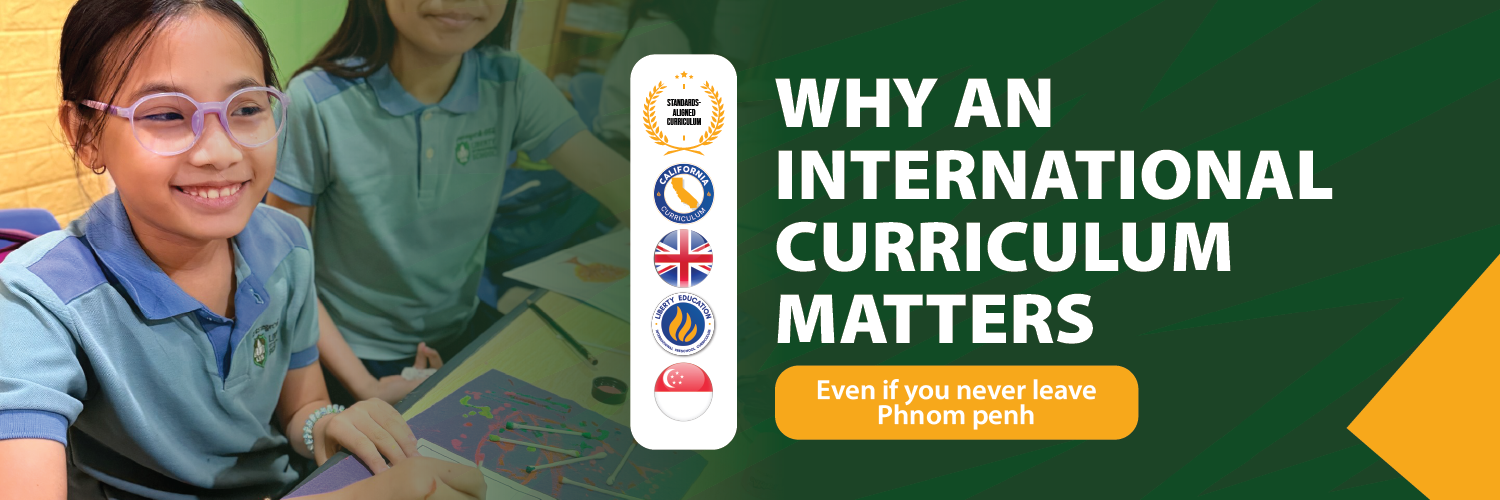
Why an International Curriculum Matters—Even if You Never Leave Phnom Penh
Introduction
Picture your child ten years from now, applying for their first job—right here in Phnom Penh. The hiring manager is scanning for creativity, critical thinking, and English communication. Those skills are no longer “nice to have”; they are the global currency of opportunity. Yet Cambodia placed 123 out of 123 countries in the 2025 EF English Proficiency Index—a sober reminder that Khmer alone cannot open every door. (kiripost.com)
An international curriculum bridges that gap, equipping students with world‑class competencies while still honouring their Khmer identity. Here’s why this matters even if your family plans to live, work, and thrive exclusively in Cambodia.
1. The Future of Work Is Borderless
The World Economic Forum’s Future of Jobs 2025 names creative thinking, analytical problem‑solving, and digital literacy as the fastest‑growing skills worldwide. (weforum.org) Cambodian companies—from banks to tech start‑ups—now compete on regional and global stages. Employers recruit talent who can collaborate across cultures, pitch ideas in English, and innovate beyond textbook answers.
International programs such as the California or Cambridge frameworks immerse students in inquiry‑based learning, STEAM projects, and real‑world problem‑solving from an early age—skills a traditional rote curriculum rarely nurtures.
2. English Is the Lingua Franca of Innovation
Khmer is our cultural heartbeat, but over 1.5 billion people speak English as a first or second language. Whether you’re negotiating with a logistics firm in Singapore or pitching a new café concept to international investors in Phnom Penh, English remains the default bridge language. An international curriculum integrates daily English usage in science, mathematics, and the arts—far beyond stand‑alone language classes—so fluency grows naturally.
Quick fact: Cambodia’s demand for English‑proficient employees outpaces supply, pushing salaries for bilingual professionals up to 40 % higher than monolingual peers. (tefl.org)
3. Creativity Is Now a Core Economic Asset
Automation is replacing routine tasks, but creativity cannot be coded. Future‑ready curricula place arts, design thinking, and cross‑disciplinary projects at the centre—giving students safe space to ideate, iterate, and fail forward. They learn to ask “Why?” and “What if?”, traits global CEOs list among their top hiring criteria.
At Liberty International School, for example, Grade 4 learners design solar ovens in science, then write persuasive English blog posts explaining their prototypes to an online audience—blending creativity, communication, and critical thinking in one unit.
4. Global Perspectives Build Local Leaders
Studying world history, environmental science, and global citizenship helps children understand Cambodia’s role in a wider context: how Mekong water management links to climate policies in Vietnam, or how ASEAN trade affects local entrepreneurs. International curricula embed these perspectives so students grow into informed citizens who can drive positive change at home.
5. Pathways Without Passports
Even if your child never studies abroad, an internationally recognized diploma (e.g., Cambridge Primary Checkpoint or US Common Core benchmarks) signals quality to local universities and employers. It also keeps options open: one scholarship email or foreign partnership could change a life trajectory overnight.
Conclusion: Investing in a Borderless Mindset
Choosing an international curriculum is not about leaving Cambodia; it’s about bringing the world to your child’s classroom. In an era where creativity outranks rote memory and English unlocks opportunities, a globally benchmarked education is the surest way to future‑proof their dreams—right here in Phnom Penh.